By Faustina Djabatey
Ghana has made significant progress in expanding access to financial services over the past decade. The rapid growth of mobile money, agent banking, and fintech innovations has transformed how people save and transact. Digital finance is increasingly positioned as a key driver of economic transformation and inclusion. According to the Ministry of Finance's 2024 Composite Financial Inclusion Index, about 60% of the population now has access to formal financial services. However, only 53.74% of those with access actively use formal financial services. This gap highlights an important reality: expanding access does not automatically lead to meaningful participation. For many women, particularly those in rural and informal sectors, financial inclusion remains constrained by barriers that go beyond availability.
So, we are left with a critical question: inclusion for whom?
While access to financial services has improved, many women continue to face structural barriers that limit their ability to fully benefit from Ghana’s evolving financial systems. Women, particularly those in the informal economy, agriculture, micro-enterprises, rural communities, and low-income settings, often experience financial inclusion differently from men.
Their experiences show that financial inclusion is not just about being able to open an account or access mobile money. It is about whether those services truly work for their realities.
Why Financial Inclusion Matters for Women
Financial inclusion plays a critical role in improving women’s economic lives. It goes beyond access to services; it enables women to save, invest, build businesses, and improve their households’ well-being.
For women working in informal economies, financial services can provide the support needed to grow small businesses, stabilize income, and build financial resilience. At a broader level, women’s financial empowerment contributes to reducing poverty and inequality by improving access to education, healthcare, and better living conditions.
But for this to happen, financial inclusion must be meaningful—not just available.
Without intentional targeting, financial inclusion risks becoming exclusive rather than inclusive.
Financial Inclusion Cannot Be Gender-Neutral
Digital financial systems often assume that everyone has equal access to smartphones, internet connectivity, digital skills, and financial knowledge. In reality, this is not the case.
Many women face challenges such as limited digital literacy, affordability issues, low confidence in using digital platforms, cultural restrictions, and limited control over household finances. These barriers are even more pronounced for women in rural areas and those living with disabilities.
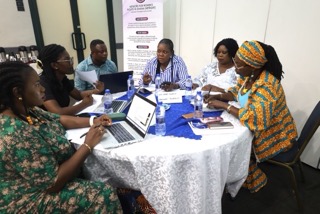
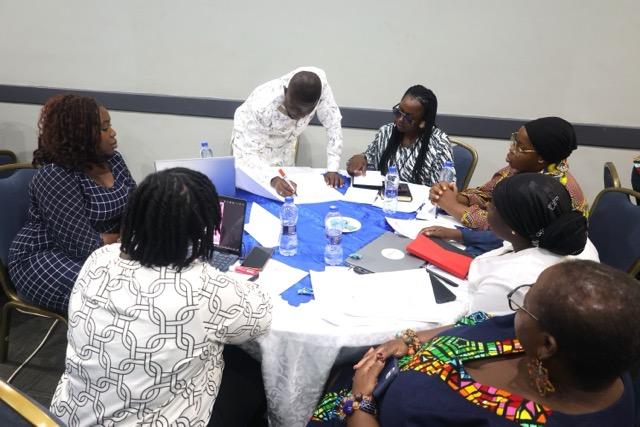
These concerns emerged strongly during a capacity-building workshop convened by NETRIGHT under the WEE-Ghana Project, bringing together civil society organizations, women’s rights organizations, trade unions, and academia to strengthen advocacy for gender-responsive financial inclusion policies rooted in women’s lived realities.
One of the strongest reflections from the workshop is that financial inclusion policies often use gender-neutral approaches, neglecting the specific challenges women face. Digital finance presumes equal access to essential resources such as mobile devices, internet connectivity, digital and financial literacy, trust in financial systems, and control over financial resources. Participants emphasized that women’s experiences of exclusion are shaped not only by income levels but also by social norms, access to technology, education, geography, disability, and decision-making power within households and communities.
One powerful reflection from the discussion stood out:
“If we are pursuing financial inclusion, how are vulnerable groups being included?”
This question remains critical as Ghana continues to expand digital financial systems.
The Role of CSOs in Advancing Inclusive Financial Systems
Civil society organizations and women’s rights groups play an important role in bridging the gap between policy and everyday reality. They help amplify women’s voices, promote financial literacy, raise awareness, and advocate for more responsive and inclusive financial systems.
Their work ensures that financial inclusion is not just a policy concept, but something that reflects real experiences and needs.
Building Financial Systems that Work for Women
As Ghana continues to expand its digital financial ecosystem, inclusion must be intentional. This means going beyond general access and focusing on practical, lived realities.
Key priorities include:
- Ensuring women’s participation in financial policymaking
- Expanding access to affordable and user-friendly digital financial services
- Strengthening digital and financial literacy programs
- Designing platforms in local languages
- Improving accessibility for persons with disabilities
- Supporting community-based financial solutions
- Expanding access to affordable credit for women entrepreneurs
These steps are essential if financial inclusion is to be truly transformative.
Conclusion
Financial inclusion is not just about access; it is about meaningful participation and real impact.
To achieve this, policymakers, financial institutions, fintech companies, and development actors must move beyond one-size-fits-all approaches and design systems that reflect women’s everyday realities.
Policymakers must advance inclusive financial policies that remove structural barriers to women’s participation in economic and financial systems. Financial institutions and fintech providers should design affordable, accessible, and user-friendly services for women in rural, informal, and underserved communities, supported by investments in digital and financial literacy, accessible infrastructure, and social protection.
Achieving meaningful financial inclusion will require sustained collaboration among government, civil society, women’s rights groups, academia, trade unions, and the private sector. Only through intentional collective action can Ghana build a financial system that is equitable and advances women’s economic empowerment and gender justice.